

 admin
admin
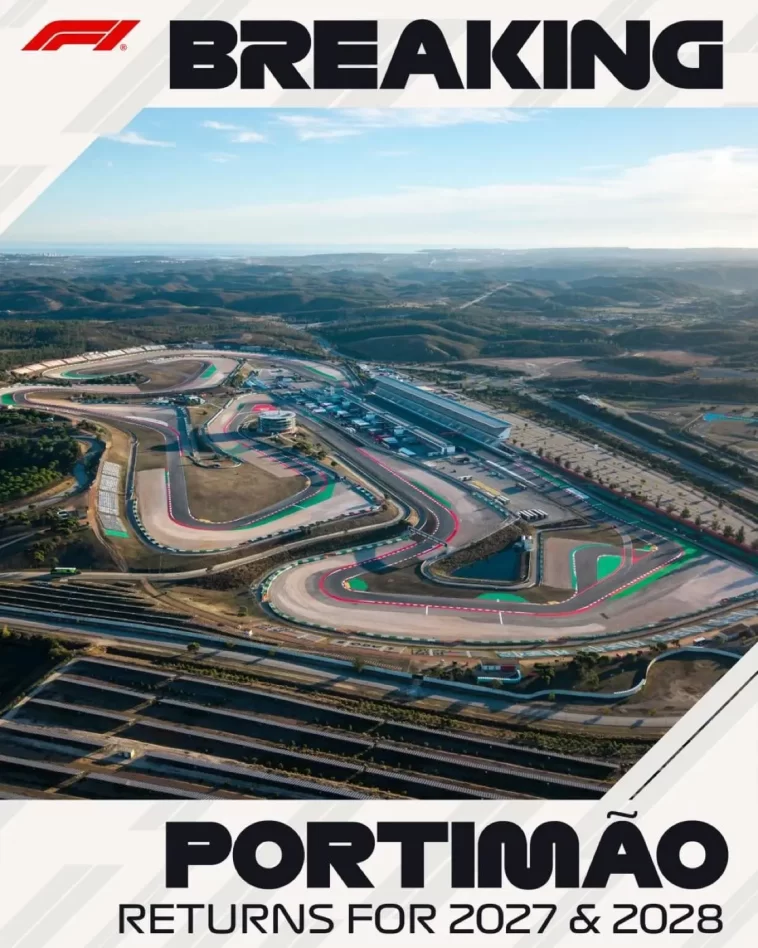
The post wasn’t meant to define anyone, yet it quickly became symbolic. Amid the backdrop of motorsport’s ever-shifting landscape, the announcement of Formula 1’s return to Portugal in 2027 and 2028 stirred a spectrum of emotions and reactions. What often feels like a mere scheduling update suddenly resonated deeply with fans, echoing through the veins of a community that thrives on the thrill of racing but also grapples with broader cultural and economic contexts.

The Autódromo Internacional do Algarve, a circuit celebrated for its technical challenges and elevation changes, re-emerges at a time when the sport is increasingly scrutinized for its choices of venues. While some expressed excitement over the return of a “proper racetrack,” others voiced a sense of disappointment regarding the limited two-year agreement. This duality in sentiment reflects a broader uncertainty about the direction of Formula 1, where nostalgia for traditional tracks clashes with the relentless push towards urban street circuits. The juxtaposition of enthusiasm and skepticism captures a moment where personal preferences are mirrored against a canvas of commercial reality.

At that moment, people projected their own experiences onto the post. Expressions of joy blended with apprehension, as fans contemplated the implications of a rotational circuit system. The notion of having a diverse array of tracks on the calendar, perhaps even exceeding thirty, emerged as a tantalizing dream for some, while others remained anchored in the concern that such changes might not yield the thrilling races they hope for. The excitement surrounding Portimão was tinged with a collective yearning for something more than just a return to a beloved venue; it was a desire for an evolving narrative that could sustain interest and engagement in the sport.

Yet, within this dialogue, a significant undercurrent emerged, especially from those directly connected to the region. For some, the return of the Grand Prix symbolized a tangible benefit to local economies, generating income for businesses in a time when many continue to feel the repercussions of global events. However, this sense of pride was complicated by a recognition that the government’s focus on such events might overshadow other pressing societal needs. This tension between economic opportunity and civic responsibility introduced a layer of complexity that deepened the conversation, illustrating how sports can serve as a microcosm for larger societal debates.
What lingered was less about the author and more about shared uncertainty. The emotional tapestry woven through the reactions reflected a community grappling not only with the return of a track but also with the broader implications of what that meant for the future of motorsport. In an age where the stakes seem ever higher and the expectations ever more complex, the news of Portimão’s return became a touchstone for discussions that transcended the track itself, hinting at a collective search for identity and purpose in a rapidly changing world.
GIPHY App Key not set. Please check settings