

 admin
admin
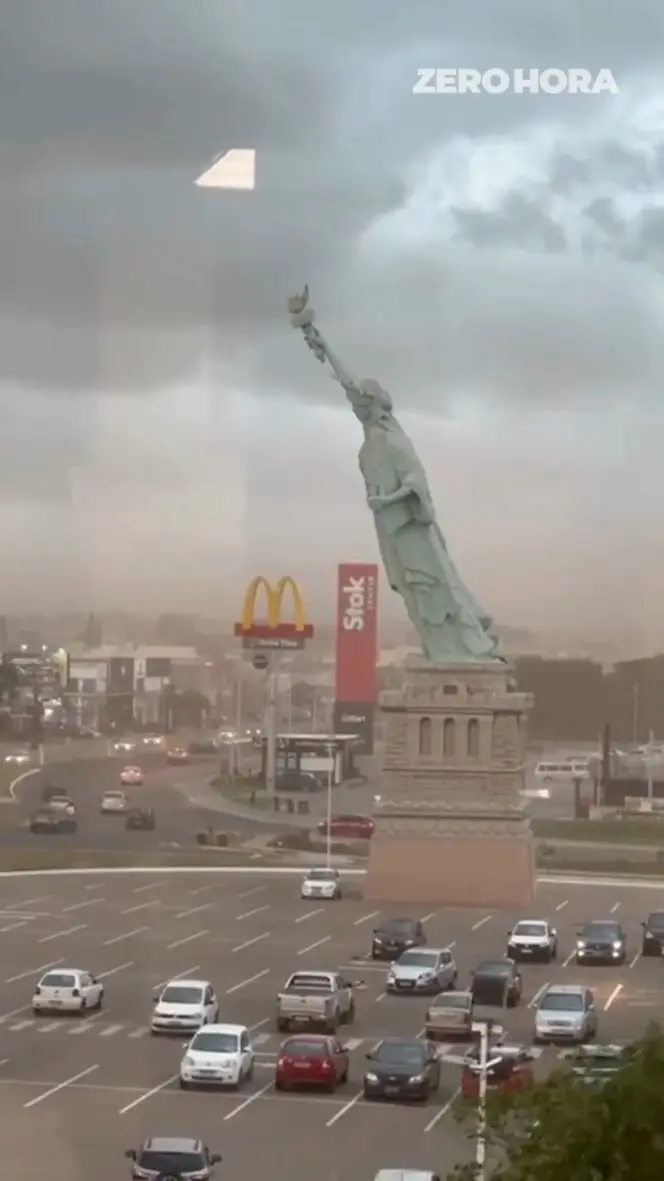
There was no outrage in the post — just exhaustion that had nowhere else to go. The image of a replica of the Statue of Liberty, once a proud symbol of hope and freedom, now draped awkwardly across a parking lot in Brazil, felt like an echo of a collective sigh. The storm that brought it down seemed almost incidental, a weather event too predictable in a world where the familiar is often upended. Yet, the sight of the statue’s toppled form stirred a murky blend of emotions, lingering just beneath the surface.

As observers took in the scene, reactions varied widely. Some found humor in the absurdity, suggesting it echoed broader sentiments about America today. Others leaned heavily into the symbolism, noting the juxtaposition of Lady Liberty’s fall against the backdrop of a McDonald’s sign, a stark reminder of capitalism’s omnipresence. It was as if the statue, once a beacon of aspiration, had become a casualty of its own idealism, reduced to a spectacle beneath a corporate logo. This dissonance between aspiration and reality resonated deeply, registering not as a singular event but as part of a larger narrative of disillusionment.
What people reacted to wasn’t the story itself, but the fatigue beneath it. The fatigue of witnessing symbols—once revered—become relics of a different time, their meanings shifting under the weight of contemporary realities. The comments reflected a spectrum of resignation, with many expressing a sense of inevitability about the statue’s collapse. It felt like an acceptance of the absurdity of life, where even icons can be diminished by the mundane, the everyday, and the commercial. This anecdote encapsulated a broader malaise, a shared understanding that the world has changed in ways that are often difficult to articulate.
Yet, the emotional texture of the reactions revealed more than just a collective weariness; they hinted at a deeper yearning for meaning. People grappled with the implications of such an event, framing it as a metaphor for current struggles, both personal and societal. The comments, steeped in irony and dark humor, served as a coping mechanism, a way to process the disarray of modern life. Amidst the laughter, there was a recognition of shared hardship, an acknowledgment of the complexities that define contemporary existence.
In the end, the imagery of a toppled statue, coupled with the commentary surrounding it, painted a portrait of a society grappling with its own identity. It captured the stark contrast between what once was and what is now, echoing a sense of loss that many felt in their daily lives. It ended without solutions, but not without a sense of being understood. This moment, both absurd and poignant, lingered as a reminder of the fragile line between aspiration and reality, leaving behind an impression that was both unsettling and strangely comforting.
GIPHY App Key not set. Please check settings