

 admin
admin
Overview:
The era of Linux gaming refers to the growing trend of developing and playing video games on the Linux operating system. Historically, Linux has been seen as a niche platform for gaming, but recent years have witnessed a surge in game availability and support, making Linux an increasingly viable option for gamers. With the introduction of tools such as Proton, which enables Windows games to run on Linux, the community’s efforts to make Linux a more gamer-friendly platform have gained traction.
Origin:
The roots of Linux gaming trace back to the early 1990s when the first native Linux games, such as “Cataclysm” and “Doom,” began to surface. However, it wasn’t until the mid-2000s that significant advancements were made, driven by the open-source community and the rise of indie game development. The establishment of Steam for Linux in 2013 marked a turning point, as it provided a centralized platform for distributing games and allowed developers to reach a wider audience.
Spread:
The spread of Linux gaming gained momentum through various factors, including the increase in indie game development, improvements in compatibility layers like Wine, and the adoption of open-source game engines. With the evolving hardware and improved graphics support on Linux, major titles from both indie and AAA studios have begun to be released or ported to the platform. Additionally, events such as Steam Play and the FOSS gaming community promote the idea of Linux as a legitimate playground for gamers.
Notable Examples:
Several popular games have been successfully ported to Linux or released natively, enhancing the platform’s reputation within the gaming community. Notable titles include “Hollow Knight,” “Dota 2,” “Civilization VI,” “Counter-Strike: Global Offensive,” and “The Witcher 3: Wild Hunt.” Furthermore, platforms like Lutris and ProtonDB have gained attention for aiding players in running Windows games on Linux.
Variants / Remixes:
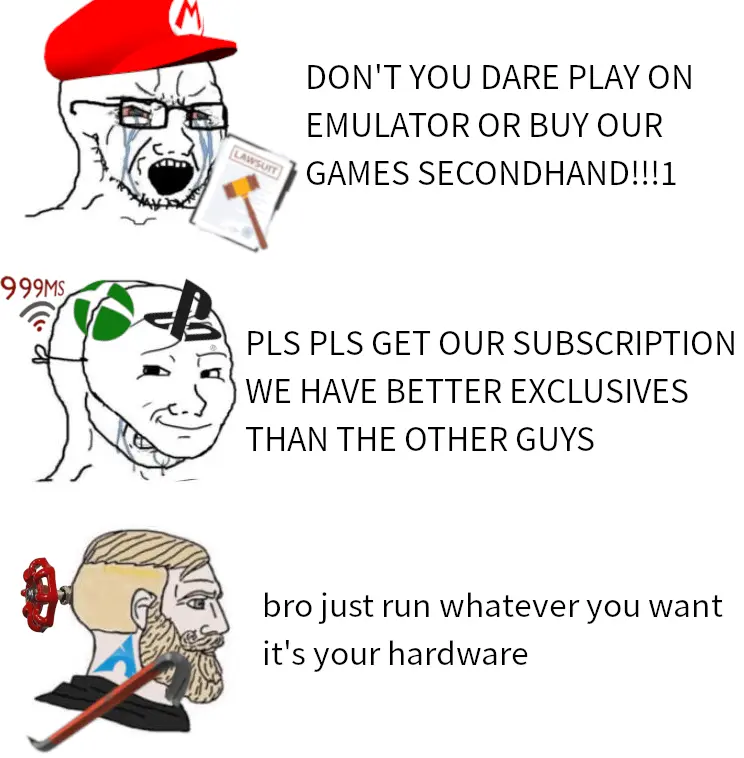
The era of Linux gaming has inspired various memes and jokes within gaming communities, typically highlighting the challenges and triumphs of playing on Linux as opposed to more mainstream operating systems. Memes often depict the perceived struggles of finding game compatibility on Linux or feature humorous comparisons between Linux users and those on Windows or macOS.
Summary:
The era of Linux gaming marks a significant shift in the landscape of video gaming as more developers recognize the potential of Linux as a robust platform for gaming. While it continues to face challenges related to compatibility and mainstream acceptance, ongoing innovations in gaming technology and a dedicated community are fostering an environment where Linux gaming can thrive, potentially reshaping the industry’s overall dynamics. The increased availability of games and tools suggests a promising future for users who choose Linux as their gaming operating system.
GIPHY App Key not set. Please check settings